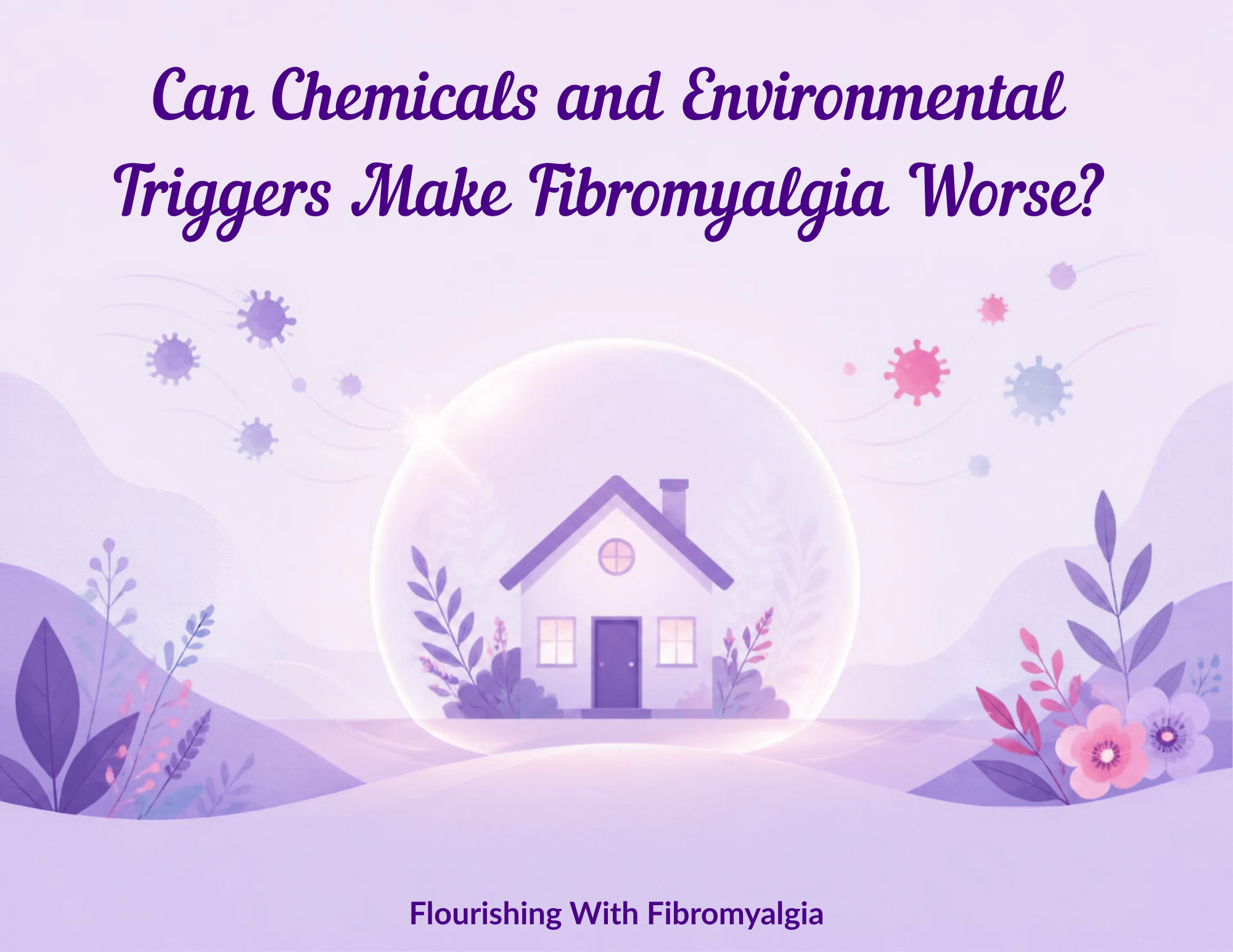
You walk down the cleaning aisle at the store, or someone next to you sprays perfume, and within minutes you feel a headache building, or your body just feels "off" in a way you can't quite explain. If everyday products and smells seem to trigger symptoms that other people around you don't seem to notice at all, I want you to know you're not imagining it, and you're definitely not alone. Environmental triggers for fibromyalgia are a real and often overlooked piece of the bigger picture we've been building throughout this series.
We've spent this whole series exploring how your stress response, sleep, energy, gut health, and food choices all interact with your fibromyalgia symptoms. Chemical and environmental exposures belong in that same conversation, because your body treats them the same way it treats any other stressor: something to detect, process, and eliminate.
Your liver and kidneys are your body's main detoxification organs, working around the clock to identify and remove substances that don't belong. Your skin plays a role too, particularly for anything you apply topically. When you're exposed to a steady stream of chemicals and toxins day after day, through cleaning products, personal care items, air quality, and more, these detoxification pathways can become genuinely overwhelmed, unable to keep pace with everything coming in.
This matters enormously in fibromyalgia specifically, because we already know your body's stress response and mitochondrial function are more fragile than most people's. Adding a heavier toxic burden on top of that doesn't just affect you the way it might affect someone without fibromyalgia, it adds another layer of stress to a system that's already working overtime.
Most people are surprised at just how many everyday products contain chemicals and toxins worth being aware of. A few of the most common categories include:
Fragranced personal care and cleaning products. Synthetic fragrances in particular are a frequently reported trigger, and they show up in far more products than most people realize, lotions, laundry detergent, air fresheners, and cleaning sprays among them.
Household mould. Mould exposure can be a significant, ongoing trigger, and it isn't always obvious, sometimes hiding behind walls or under flooring rather than in plain sight.
Pesticides and herbicides on non-organic produce, which introduce a steady low level of chemical exposure through something you do every single day: eating.
Plastics, particularly when they come into contact with food or beverages, especially when heated.
Poor indoor air quality, from sources like off-gassing furniture, inadequate ventilation, or nearby outdoor pollution.
Beyond simply adding to your body's overall toxic burden, some of these chemicals, particularly those found in beauty products, cleaning products, and plastics, are able to bind to the same receptors your natural hormones use in your body. These are sometimes called xenoestrogens, and because they can bind more strongly than your body's own hormones, they can throw off your natural hormonal balance, adding yet another layer of disruption on top of everything else your body is managing.
Here's a piece worth understanding if you've been following our conversation about energy and fatigue: your mitochondria, the parts of your cells responsible for producing usable energy, are particularly vulnerable to toxic exposures. Since fibromyalgia already tends to involve mitochondria that aren't functioning as efficiently as we'd expect, ongoing chemical exposure can compound that dysfunction further, potentially deepening the fatigue and low energy so many of you already experience.
This is exactly why reducing unnecessary chemical exposure isn't just about avoiding an immediate reaction like a headache or skin irritation. It's also about reducing an ongoing, cumulative burden on systems that are already working harder than they should have to.
Learning more about environmental exposures and how they connect to your fibromyalgia symptoms is something you can explore step by step inside the Flourishing With Fibromyalgia Academy.
I don't want you to read this and feel like you need to replace everything in your house this weekend. That kind of overwhelm tends to backfire. Instead, here are a few realistic, manageable starting points:
Start with the products you're exposed to most often and most closely. Many people start with the things they're exposed to most often and most directly, like personal care products used on the skin or cleaning products used regularly at home.
Look for fragrance-free options first. Synthetic fragrance is one of the most commonly reported triggers, and fragrance-free alternatives exist for nearly every product category, often at a similar price point to what you're already using.
Improve ventilation where you can. Opening windows when weather allows, and ensuring good airflow in spaces where you spend a lot of time, can meaningfully improve indoor air quality without any cost at all.
Address mould promptly and safely if you find it. If you suspect mould in your home, this is worth investigating and addressing properly, ideally with professional help, rather than leaving it to linger.
Wash produce thoroughly, and consider organic for the items you eat most often. You don't need to buy everything organic to make a meaningful difference, focusing on the foods you eat regularly and in larger quantities tends to offer the best return on that particular investment.
Make one change at a time. Swapping out every product in your home simultaneously makes it very difficult to notice what's actually helping, and it can feel financially and logistically overwhelming. Pick one category, get comfortable with it, then move to the next.
As always, if you experience severe, sudden, or concerning reactions to specific chemicals or exposures, please bring this to your doctor, since your healthcare provider can help determine whether further evaluation or specific precautions are needed for your situation.
If chemical smells, cleaning products, or environmental exposures have seemed to affect you more than the people around you, I hope this offers some validation and a place to start. Your physical environment is genuinely one of the sources of stress your body has to manage, right alongside your food, your sleep, and your emotional load, and reducing unnecessary exposure here can meaningfully lighten your body's overall burden.
The Flourishing With Fibromyalgia Academy has a full course on identifying and reducing everyday environmental triggers, as part of your bigger picture alongside stress, sleep, gut health, and more. You can start with a 7 day free trial.
Start your free 7 day trial of the Flourishing With Fibromyalgia Academy and take a closer look at your environment as part of the whole picture.