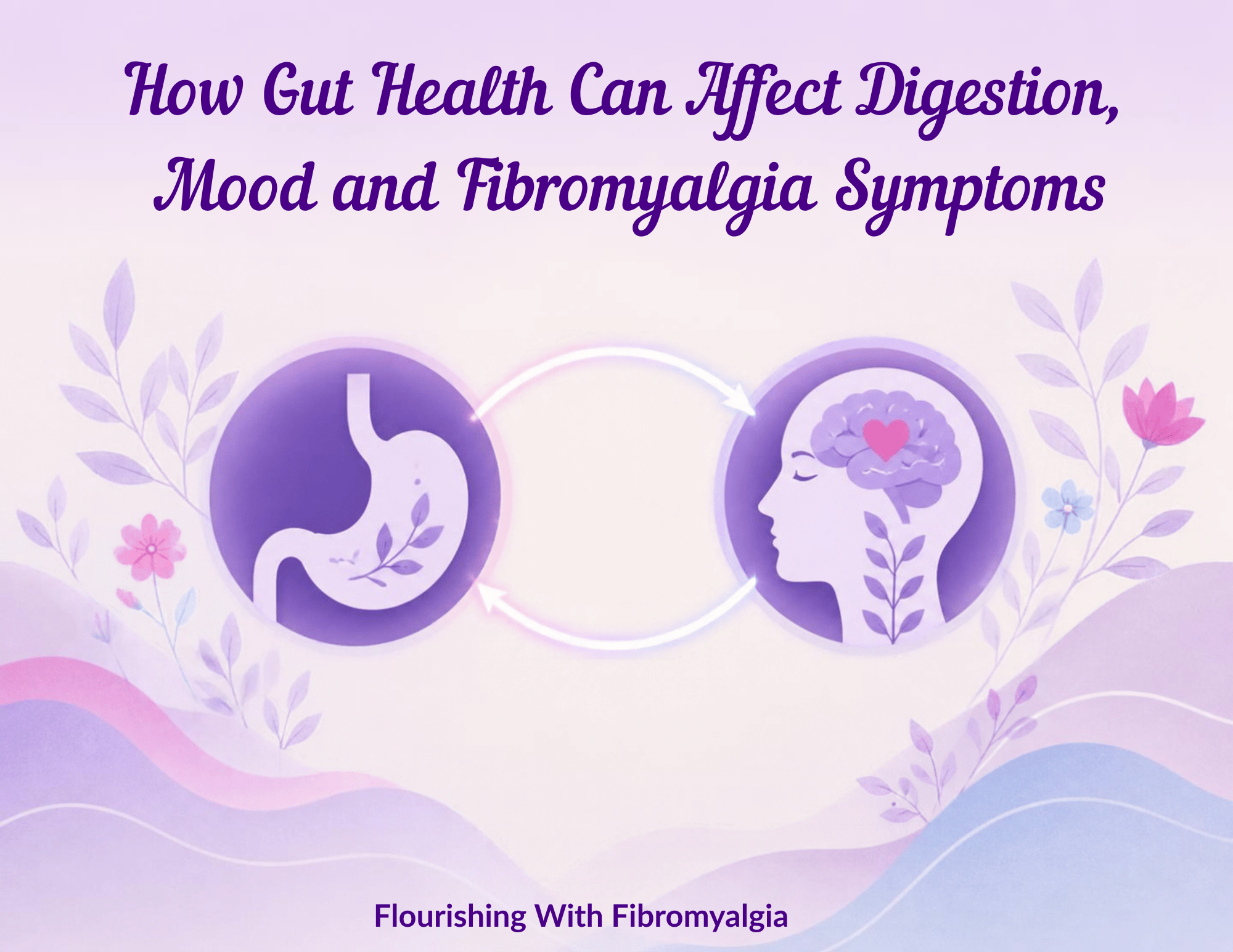
In our last post, we introduced your gut microbiome and its two-way relationship with your dysfunctional stress response. Today I want to go further into what that imbalance actually does once it's set in motion, because the effects reach much further than bloating or an upset stomach. Gut health and fibromyalgia symptoms are connected through digestion, yes, but also through mood, brain fog, and pain in ways that genuinely surprise most people the first time they hear them explained.
Let's start with what happens physically when your gut microbiome is out of balance for an extended period. The toxins produced by less helpful microbes, combined with ongoing inflammation, can actually damage the cells that line your digestive tract. When those cells become damaged, they shrink and no longer form the tight, selective barrier they're supposed to maintain between your gut and the rest of your body.
You may have heard this described as "leaky gut," or the more clinical term, intestinal hyperpermeability. Whatever you call it, the result is the same: larger food particles, toxins, and other substances that should stay contained within your digestive tract instead pass into your bloodstream, where your immune system often treats them as foreign invaders and mounts an inflammatory response. This is also closely tied to how new food sensitivities can develop over time, something we touched on in our food triggers series.
There's a related process called bacterial translocation, where bacterial toxins themselves cross into the bloodstream through that same compromised barrier. The result is a body absorbing things it was never meant to absorb, generating inflammation well beyond the digestive tract itself, in muscles, joints, and even the brain. This is part of why researchers believe fibro fog, the brain fog so many of you experience, is connected to actual inflammation within the brain. When your whole body's inflammatory load goes up, your brain doesn't get spared.
Here's a fact that tends to genuinely surprise people: your gut is responsible for producing roughly ninety percent of the serotonin in your entire body. Serotonin is the neurotransmitter most closely associated with mood and depression, and it's also the target of many commonly prescribed antidepressant medications, which work by increasing its availability in the brain.
When your gut microbiome isn't balanced, serotonin production can suffer, which has consequences well beyond mood alone. Serotonin gets converted into melatonin, your sleep hormone, so lower serotonin production can mean lower melatonin too, contributing to the sleep difficulties we talked about earlier in this series. And since melatonin needs to be in balance with cortisol for you to feel well and sleep restfully, a gut imbalance can ripple all the way into that delicate hormonal relationship we've discussed before.
Your gut microbiome doesn't stop at serotonin either. It also plays a role in the production of dopamine, which affects motivation, memory, and mood, GABA, a calming neurotransmitter that helps regulate anxiety and fear, and acetylcholine, which supports memory and concentration. Research on these specific neurotransmitters in fibromyalgia is still developing, but their general importance to brain function and mood regulation is well established, which makes your gut's role in producing them worth taking seriously.
Understanding how mood, sleep, and physical symptoms may be connected through the gut is something you can explore step by step inside the Flourishing With Fibromyalgia Academy.
If you remember our conversation about pacing and your energy reserves, there's a gut connection there as well, one that surprises even people who've been following this series closely. Your mitochondria, the parts of your cells responsible for producing usable energy, actually originated from bacteria billions of years ago. Because of that shared ancestry, your mitochondria remain sensitive to many of the same things that affect your gut microbiome, including antibiotics and the toxins produced when your gut microbiome is imbalanced.
This means an unhealthy gut microbiome doesn't just affect digestion and mood, it can also place additional strain on the very cellular machinery responsible for your energy production, compounding the fatigue so many of you already experience. Everything in this series really does connect back to everything else.
I know this can feel like a lot, digestion, mood, brain fog, energy, all tangled up with the same underlying gut imbalance. I want to reassure you that understanding these connections isn't meant to overwhelm you, it's meant to help you see why working on your gut health is rarely wasted effort, even if your primary concern was pain or fatigue rather than digestion.
A few gentle threads worth holding onto from everything we've covered in this series so far:
Your mood dips aren't purely psychological, and they don't need to be labeled that way to be taken seriously. A gut that isn't producing adequate serotonin and other mood-related neurotransmitters is a physical contributor worth understanding, alongside anything else going on in your life.
Supporting your gut microbiome, through the food variety, fermented foods, and stress management practices we've discussed, is genuinely supporting more than just digestion. You're supporting your mood, your sleep, your energy production, and your overall inflammatory load, all at once.
None of this replaces professional mental health support. If you're experiencing persistent low mood, anxiety, or depression, please reach out to your doctor or a mental health professional. Gut health can be a meaningful piece of the picture, but it isn't a substitute for proper care when mood symptoms are significant or persistent.
If you've made it through this whole series on nutrition, food triggers, and now the gut microbiome, I hope you're starting to see just how interconnected fibromyalgia symptoms really are. Your gut isn't a separate system quietly causing its own isolated problems, it's deeply woven into your digestion, your mood, your sleep, your energy, and the same dysfunctional stress response we started this whole journey with.
Your gut doesn't work in isolation, and neither do your fibromyalgia symptoms. The Flourishing With Fibromyalgia Academy explores these connections step by step, with courses that look at the gut alongside stress, sleep, mood, and energy instead of looking at each symptom on its own. You can start with a 7 day free trial.
Get started with a free 7 day trial of the Flourishing With Fibromyalgia Academy.